“108 Hours” — A South Pole Vehicle Expedition and a Guinness World Record
“108 Hours” tells the story of Kazakh travellers driving across Antarctica to the South Pole. A record-setting journey in 2010 and a larger expedition in 2011, marking the twentieth anniversary of Kazakhstan’s independence, became important milestones in the Kazakh Geographic Society’s polar activities. A documentary subsequently brought this story to a wider audience.
The record-setting first stage
In 2010, Kazakhstanis Konstantin Orlov and Stanislav Makarenko participated in a reconnaissance journey to the South Pole. This expedition was associated with a Guinness World Record for the fastest overland journey from the Novolazarevskaya station area, known as Novo, to the South Pole.
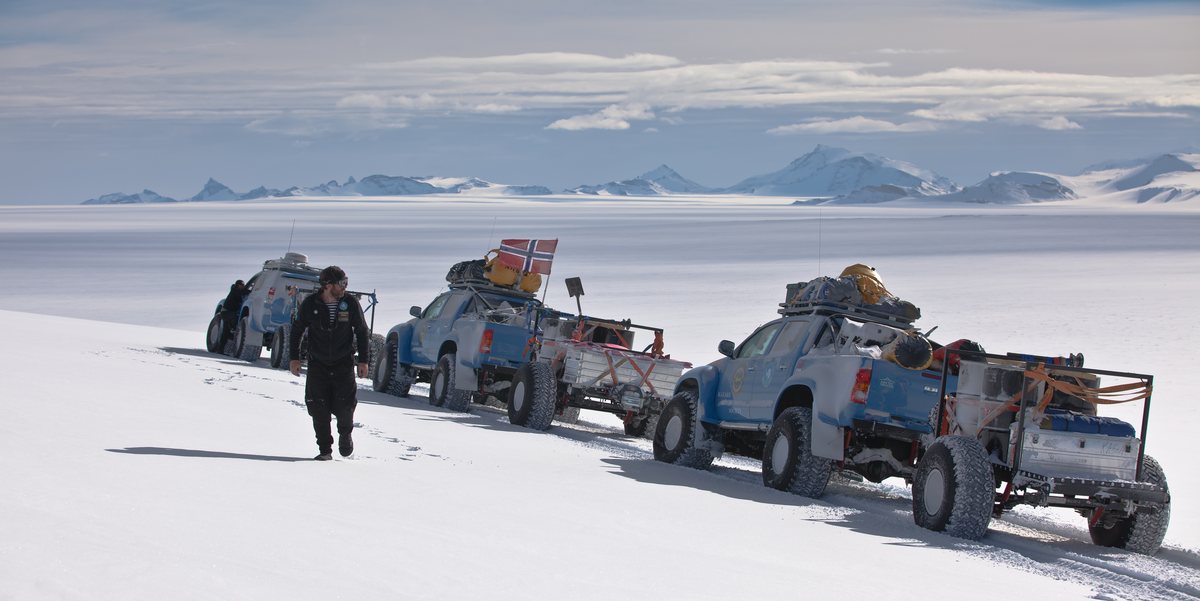
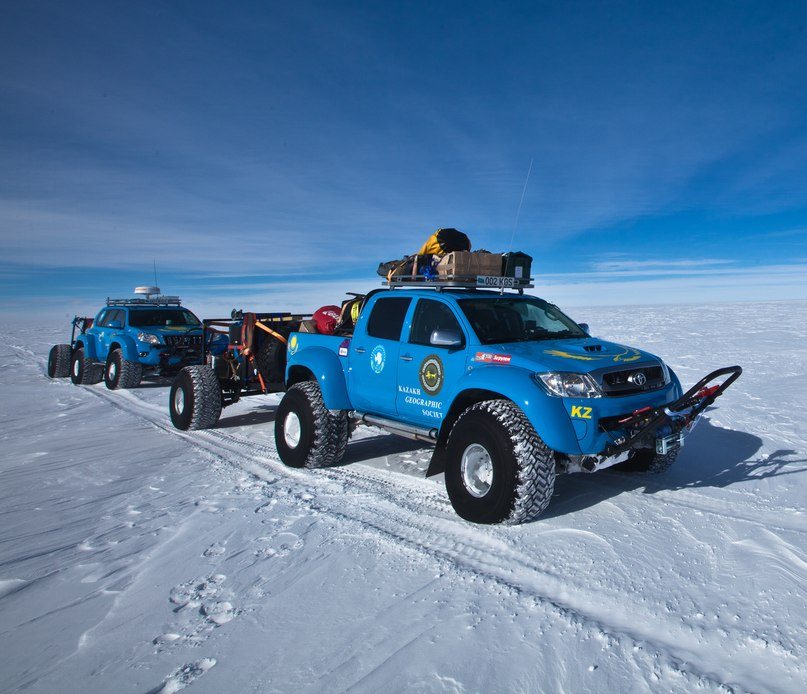
According to Arctic Trucks, two specially prepared vehicles covered 2,308 kilometres across the Antarctic plateau in 108 hours—four and a half days. The achievement demonstrated the capabilities of vehicle travel in polar conditions and provided experience for a subsequent expedition.
On a route of this kind, progress depends on vehicle reliability, fuel planning, navigation and coordinated teamwork. In the frozen interior, individual decisions affect the movement of the entire group.
An expedition marking twenty years of independence
In 2011, the Kazakh Geographic Society returned to Antarctica with a larger team. Led by Nurlan Abduov, the expedition included Sergey Bodrov, Konstantin Orlov, Ordenbek Mazbayev, Berik Baimagambetov, Vasily Mozzhukhin and Icelandic mechanic Eyjólfur Már Teitsson.
The seven participants travelled from Novo airfield towards the South Pole in three specially prepared vehicles. KazGeo’s account describes this route as approximately 2,400 kilometres long.
The team brought together travellers, scientists and specialists responsible for technical and medical support. Monitoring the vehicles, maintaining the route and looking after the participants’ safety formed the basis of their daily work.
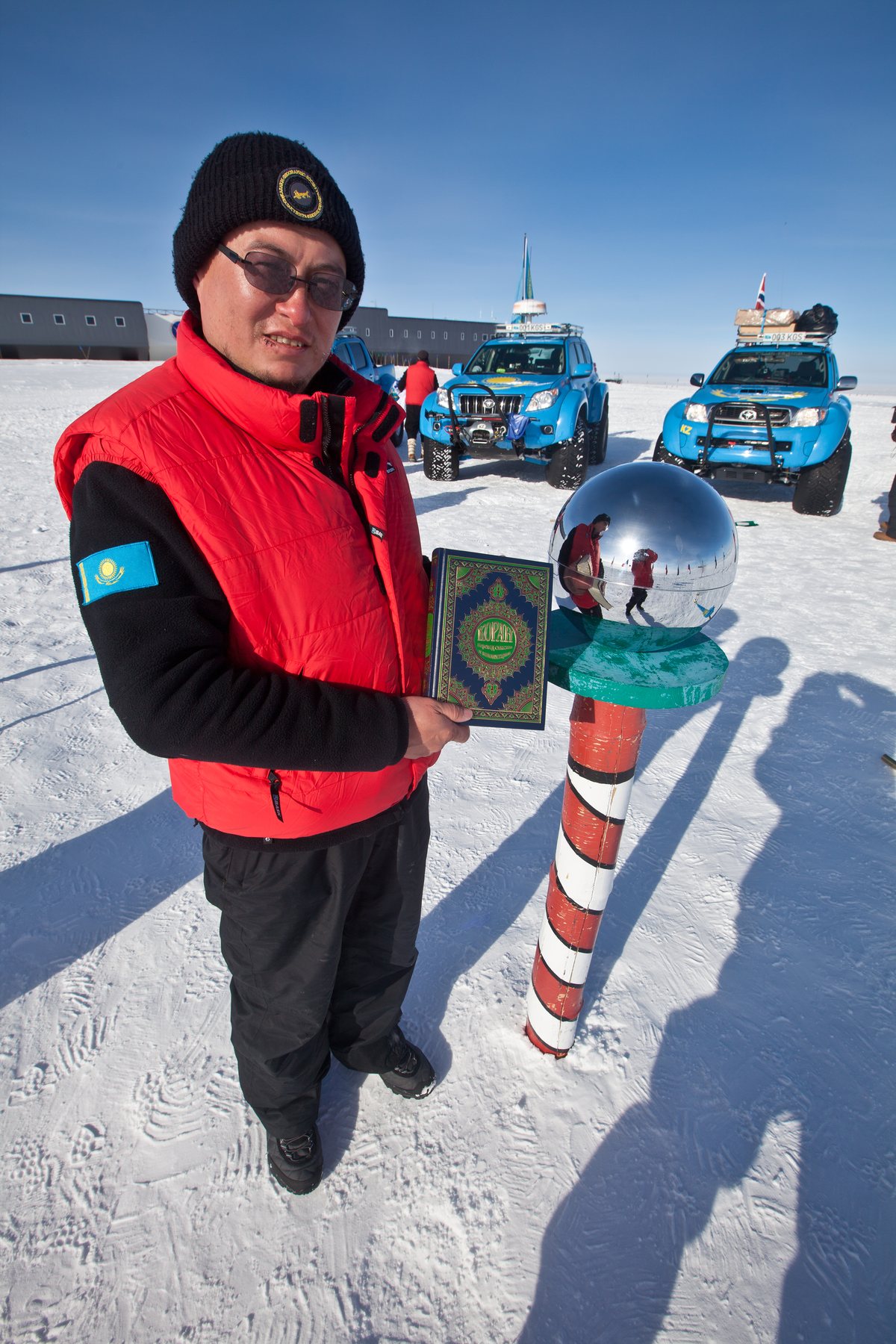
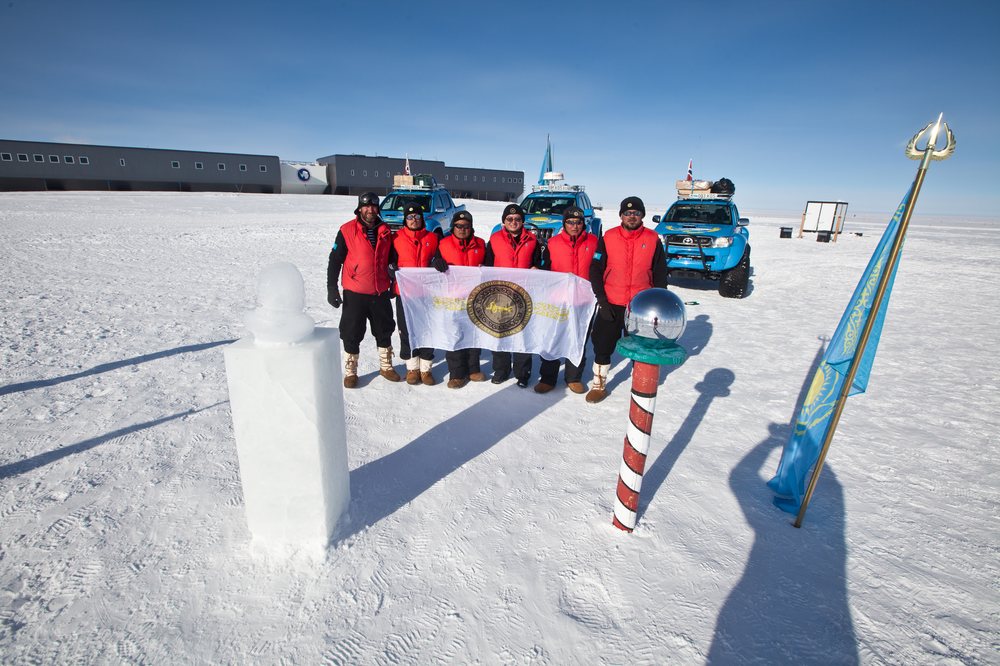
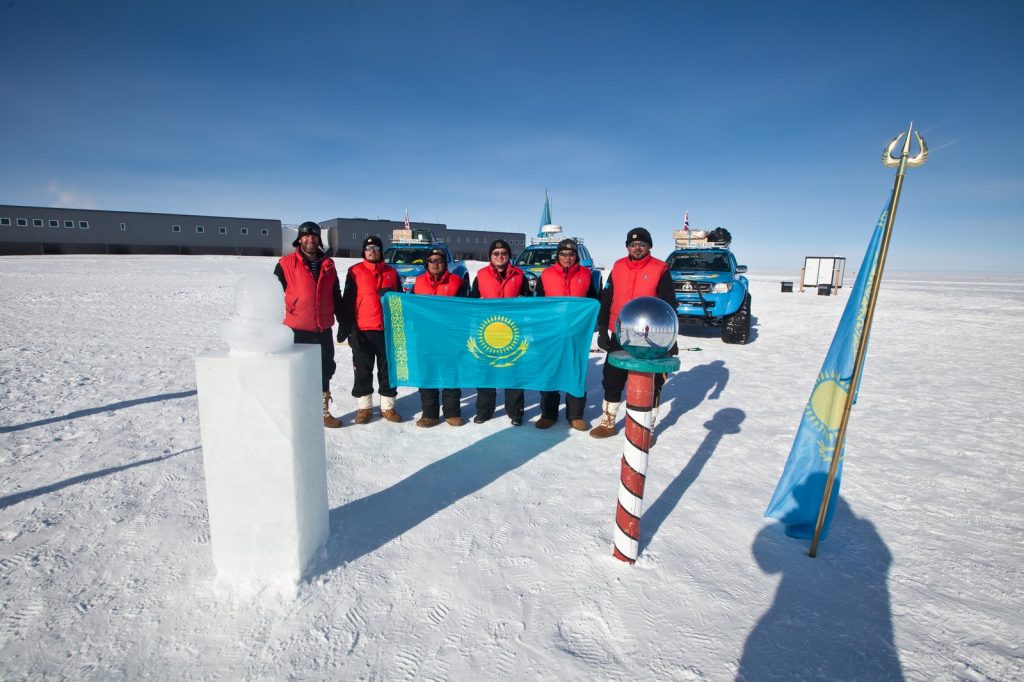
Kazakhstan’s flag on a historic date
The expedition reached the South Pole on 14 December 2011 and raised Kazakhstan’s flag. Its arrival coincided with the centenary of Roald Amundsen’s expedition reaching the pole. For the Kazakh team, the journey also marked twenty years of national independence.
These two anniversaries gave the expedition particular significance. The participants connected a milestone in their country’s history with a defining event in the history of polar exploration.
From expedition to documentary
Footage recorded during the journey became the documentary “108 Hours,” presented in Almaty on 12 December 2012. The film was made available with Kazakh and English subtitles.
The recordings allowed audiences to encounter Antarctica through the participants’ experiences. The expedition continued on screen as a story about travelling together, solving practical problems and reaching a shared destination.
For the Kazakh Geographic Society, the record-setting journey, anniversary expedition and documentary formed connected chapters of a broader polar story. Together, they created practical experience and preserved it for future travellers and audiences interested in Antarctica.